When adhesive is applied using a notched trowel, the material is distributed in defined ribs. The geometry of the notch pattern determines rib shape, spacing and height – and therefore the amount of adhesive applied per square metre.
Notch width, depth and spacing influence how much adhesive is applied. Wetting also depends on the substrate and application. Follow the adhesive manufacturer’s instructions.
Precise dimensions enable uniform results across tools, batches and production series.
High manufacturing accuracy and clean edges support smooth application and long service life.
Depending on the application, notched trowels, adhesive trowels or replaceable notched blades are used.
The notch pattern defines geometry, material flow and reproducibility.
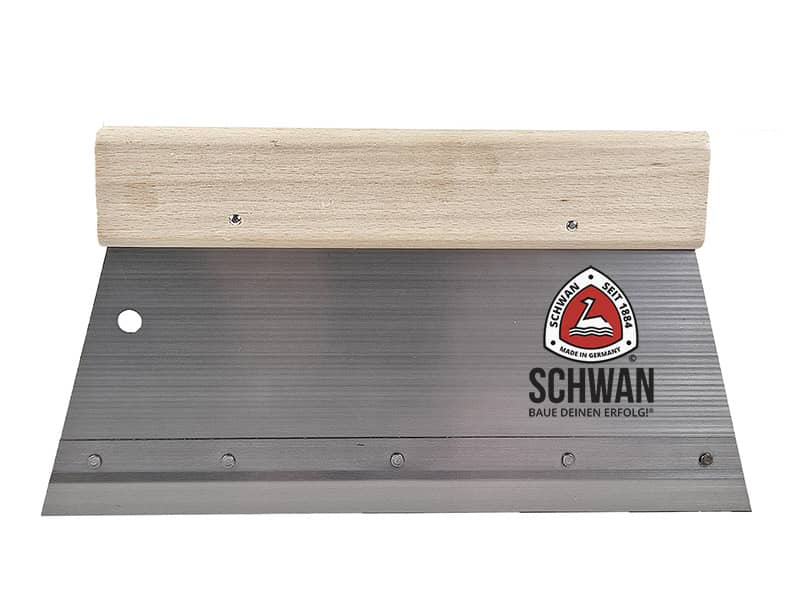
Item No. 421028
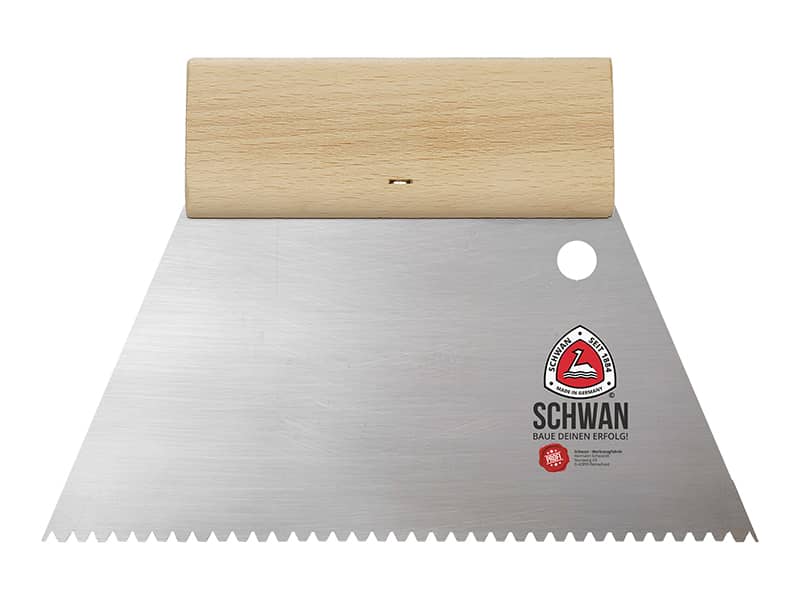
Item No. 4201XX (XX = version)
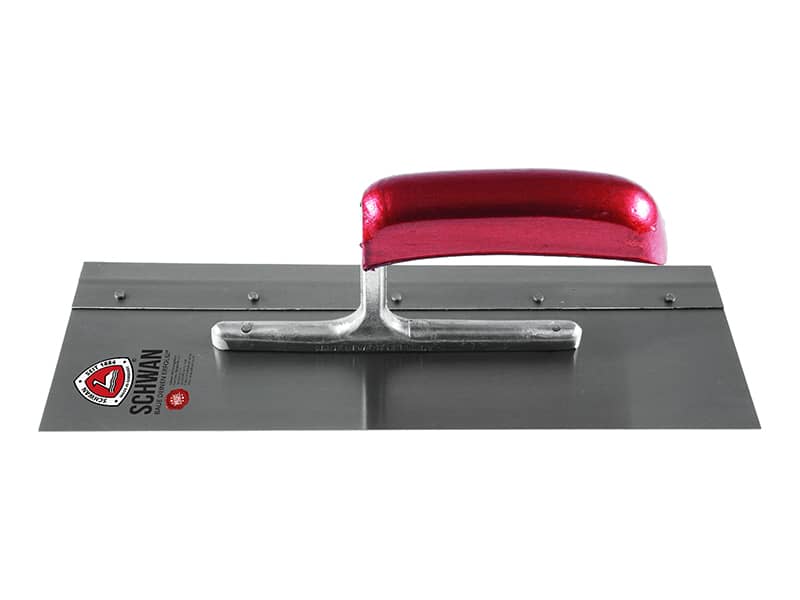
Item No. 414028
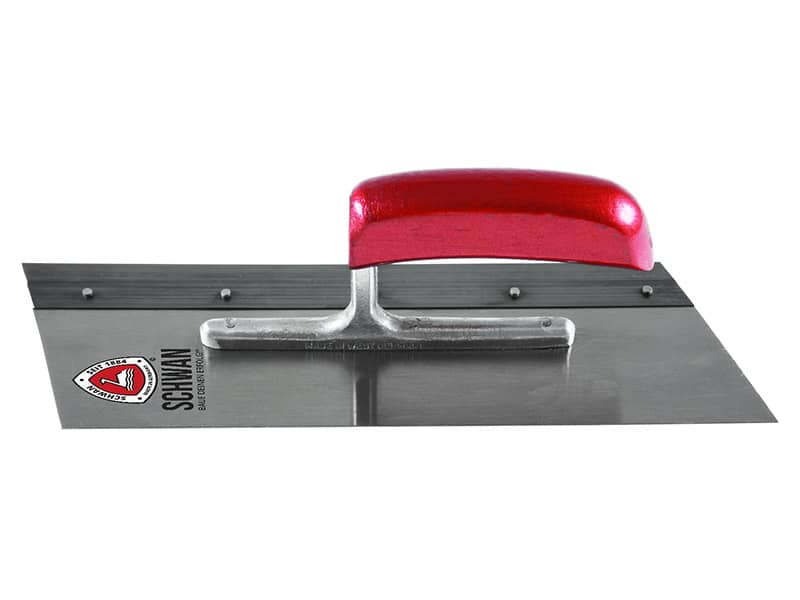
Item No. 413028
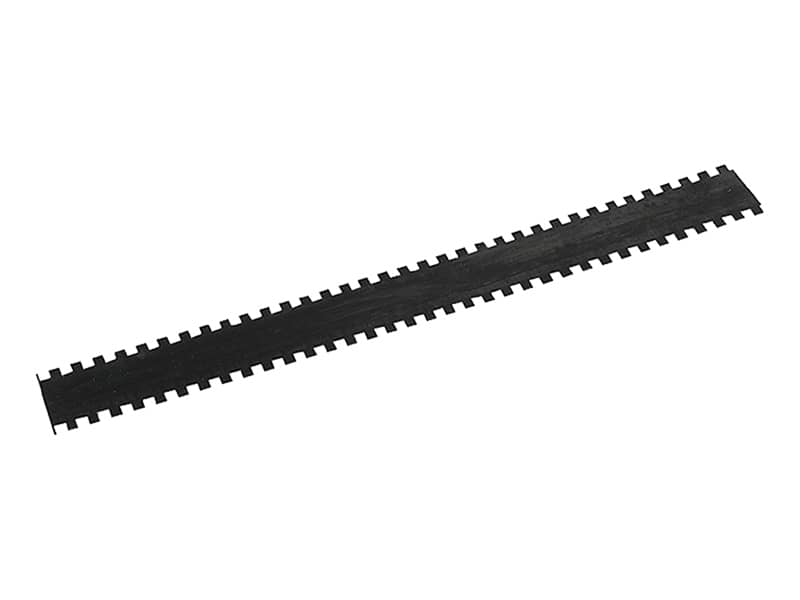
Various versions, see notching table.
Trowel notchings are defined by specific dimensional parameters.
In addition, different notch shapes are used depending on the application and the required adhesive coverage.
The pitch is the distance between the same point on two adjacent notches. It equals a + b.
The TKB data sheet gives an inside radius of 0.2 to 0.3 mm for the tips of triangular notches and the inner corners of rectangular notches.
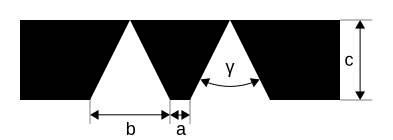
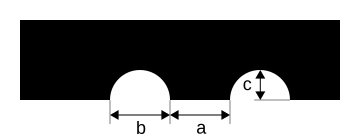
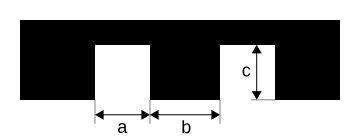
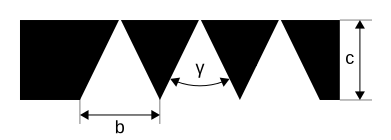
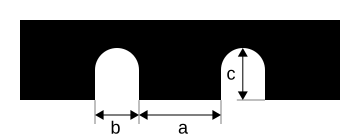
The technical reference is TKB Data Sheet 6: Trowel notches for floor covering, parquet and tile installation (PDF, in German). The data sheet is a non-binding guideline.
Defined tolerances and suitable materials are essential for achieving repeatable results. This is particularly important for series production, OEM projects and industrial applications.
a ± 0.1 mm
b ± 0.1 mm
(a + b) ± 0.1 mm
c ± 0.1 mm
γ ± 0.5°
These values serve as a reference for dimensional accuracy and comparability of notch patterns.
For notched strips, the TKB data sheet recommends spring steel with a minimum hardness of 46 Rockwell or a higher-grade material. It specifies a minimum sheet thickness of 0.5 mm.
The TKB data sheet permits the following marking on notchings that meet all its requirements
and are subject to appropriate quality control:
Manufacturer / TKB notching number / Year
Additionally, we use internal notching numbers. These serve for clear product and variant identification (see section Manufacturable notch patterns).
When selecting suitable notch patterns, adhesive manufacturers assume that the trowel is guided at an angle of approximately 60° to the substrate. At a flatter angle, the required amount of adhesive may not be achieved.
The degree of wear should be checked regularly, for example by visual comparison with a new notched bar or by monitoring adhesive consumption per area. Inspection is recommended every 50–80 m², depending on the substrate and notch shape.
Are you planning a production series or do you require a custom notch pattern based on a drawing? We support you with geometry design, material selection and manufacturing details – from prototypes to series production.
Standardized notching profiles for various applications in adhesive application and leveling technology.
Additional geometries, modifications and custom notchings are manufactured according to customer specifications.
The cards show the notch patterns we offer and their nominal dimensions from TKB Data Sheet 6. Use these reference values to select a geometry.
Note on designation: In addition to the TKB reference, SCHWAN uses internal notching numbers. These appear in the notching cards as “SCHWAN No. …”. This allows clear product identification and ordering, while maintaining a direct reference to the corresponding TKB notching. Example: SCHWAN No. 06 identifies the B1 notch pattern.
Meaning of the column values shown in the notching cards (dimensions in mm, angles in °).


In the γ column, R, U and M identify rectangular, U-shaped and mortar notches. “Var” means variant.
34 notch patterns

Schwan No. 01
Series: A

Schwan No. 02
Series: A

Schwan No. 03
Series: A

Schwan No. 04
Series: A

Schwan No. 05
Series: A

Schwan No. 06
Series: B

Schwan No. 07
Series: B

Schwan No. 08
Series: B

Schwan No. 41
Series: B

Schwan No. 42
Series: B

Schwan No. 43
Series: B

Schwan No. 44
Series: B

Schwan No. 45
Series: B

Schwan No. 46
Series: B

Schwan No. 40
Series: B

Schwan No. 47
Series: B

Schwan No. 48
Series: B

Schwan No. 49
Series: B

Schwan No. 50
Series: B

Schwan No. 51
Series: B

Schwan No. 52
Series: B

Schwan No. 16
Series: C

Schwan No. 18
Series: C

Schwan No. 15
Series: C

Schwan No. 20
Series: C

Schwan No. 22
Series: C

Schwan No. 61
Series: S

Schwan No. 62
Series: S

Schwan No. 63
Series: S

Schwan No. 64
Series: S

Schwan No. 70
Series: R

Schwan No. 71
Series: R

Schwan No. 72
Series: R

Schwan No. 75
Series: M
Note: If you cannot find a specific notch pattern or require different dimensions, we manufacture custom notch patterns according to your specification. The dimension definitions a, b, c and γ are explained in the section Dimension definitions and notch shapes.
Are you developing your own systems or require a defined notching for your product line?
We make notched strips and tools with common notch patterns, as well as custom geometries based on drawings, samples or technical specifications.
Send us the notch code or a drawing – we will get back to you with any questions, a feasibility check and a quotation.
